05.1 What the programme is designed to return to the country. Directional; confirmed by the independent studies.
The strongest argument for RD100 is not its return to investors, though that is real. It is what the programme returns to Ghana: cleaner cities, energy made at home, and value that would otherwise leave to pay for imported fuel.
05.1 What the programme is designed to return to the country. Directional; confirmed by the independent studies.
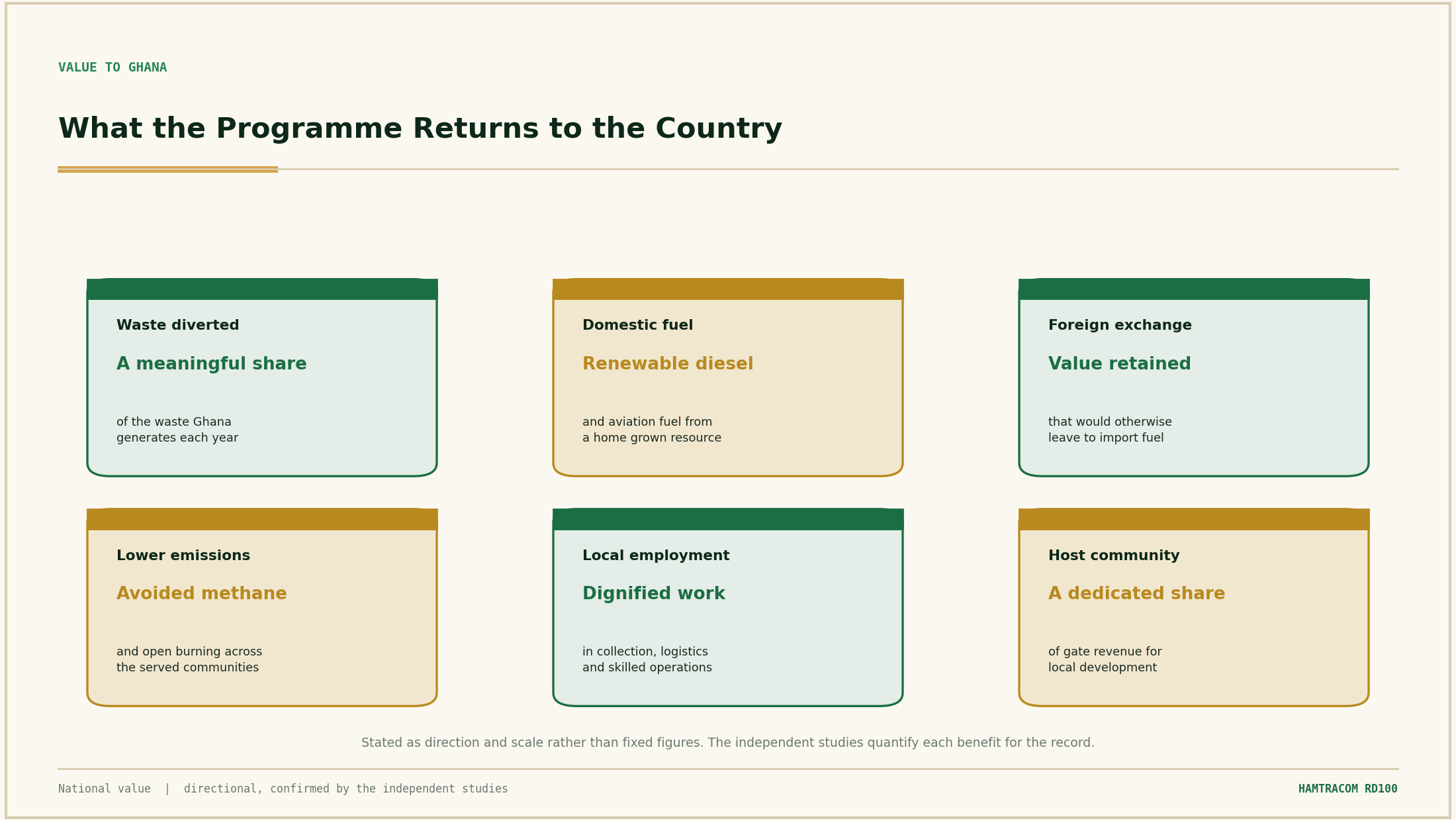
A meaningful share of the waste the country generates each year, diverted from open dumping and burning.
Renewable diesel and aviation fuel made from a domestic resource, easing reliance on imported fuel.
Value retained in the country that would otherwise be spent abroad on fuel imports.
Avoided methane from dumpsites and less open burning across the communities served.
Employment across collection, logistics and skilled operations, with a Ghana-first hiring approach.
A dedicated share of revenue committed to development in the community that hosts the programme.
These benefits are stated as direction and scale rather than fixed figures. The independent Feasibility Study quantifies each of them for the record, and the programme seeks no capital, loan or sovereign guarantee from the State for its waste service.
A daily burden, engineered into a national asset.